Oquirrh Elementary Student Wellness Plan 2026-27
Our school’s mission is to:
Mission Statement: To provide a safe, inclusive, and nurturing community where every student is challenged to achieve their academic and personal best. Through high-quality instruction and intentional support, we will foster an environment where all learners can achieve meaningful growth.
Vision Statement: We envision a future where every student achieves their academic and personal best, grows with confidence, and leaves our school prepared for lifelong success within and beyond the classroom.
Student Wellness & Prevention Plan
Prevention Overview:
Research shows that addressing behavior and wellness concerns before they occur is much more effective than trying to stop them after they start. These proactive efforts are our primary prevention strategies. These strategies focus on the root causes, like enhancing protective factors and decreasing risk factors, strengthen well-being and help students build resilience to thrive. They act as buffers against risk and promote resilience, healthy development, and positive outcomes. Risk factors are conditions that increase the likelihood of academic, behavioral, or mental health difficulties. Our school supports student development of Utah State Board of Education’s Five Protective Factors represented by the graphic below.
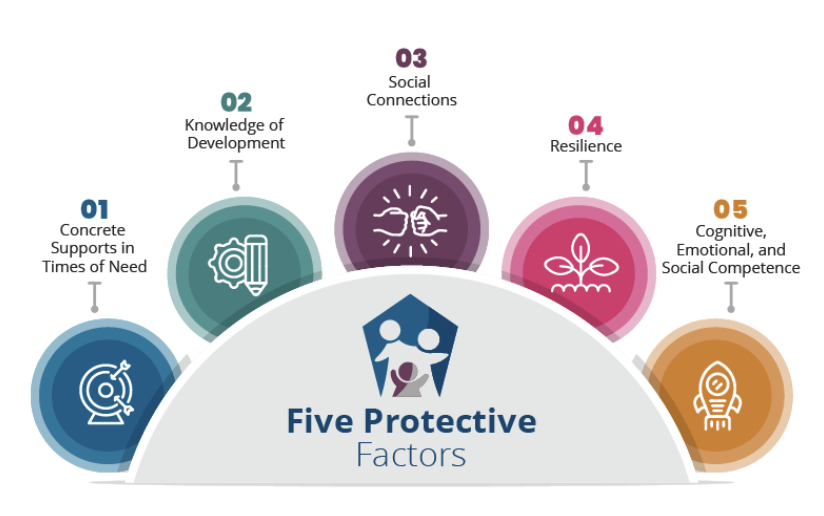
Our school supports student wellness by prioritizing primary prevention practices that are centered on building protective factors and promoting positive, intentional social, emotional, academic, and behavioral development for all students. This prevention plan includes universal strategies (for all students) as well as targeted strategies (for small groups or a few students) for each section below.
Student Engagement & Attendance:
Our school believes that attendance directly impacts academic achievement, social development, and future success. Attendance also reflects a student’s sense of belonging. Some of the efforts our school prioritizes to encourage student engagement and promote attendance are listed below:
- Our school uses Panorama early warning system to identify students who may be at risk of disengagement or absenteeism, which allows us to proactively support students in feeling connected and engaged at school.
- Our school staff cares about our students and is committed to getting to know them to help them feel a sense of belonging.
- Our school creates frequent opportunities for students to connect with each other, build friendships, and feel a sense of belonging with their peers during class, at recess and lunch, and throughout their day.
- Our school staff monitors attendance using the District dashboard and notifies parents of absences.
- Our school informs families of student progress and needs. We use a variety of communication methods, including home visits, in-person or Zoom meetings, phone calls, emails, class newsletters, Skylert messages, parent teacher conferences, IEP/504 meetings, and Parent Square messages.
- Our school has designed a school-wide system of procedures, expectations, consequences, and rewards which motivate students towards appropriate behavior and help students feel recognized for their positive efforts.
- Our school gives each student the opportunity to be recognized for academic and social accomplishments through our Mountain Man ticket reward system, Brag Tags, yearly Mountain Man awards, Attendance incentives, and weekly Principal Pride ceremonies for students and parents to celebrate achievements.
- Our school conducts weekly collaborative team meetings for each grade level where staff members discuss student needs and review needed interventions and supports.
- Our school provides access to parent and family resources including a district partnership with the Jordan Family Education Center (classes and counseling) and partnerships with the Utah Food Bank and a weekend food bag program.
- Our school intervenes with early warning, content monitoring, and anonymous reporting tools with support from district specialists to identify and support students who may be at risk.
- Our school provides student leadership programs, including:
- Student Leadership Team, where students plan events, activities, and initiatives to serve our school community
- Safety Patrol, where students help staff manage drop off and pick up procedures outside of the school.
- A quarterly Mountain Man Student Advisory Counsel where student representatives from grade levels can give administration feedback about schoolwide programs and other happenings at the school.
- Our fifth grade classes participate in the DARE program with the West Jordan Police Department.
- Our school has weekly visits from the Latinos in Action Club at Joel P Jensen Middle school, who assist in classrooms and encourage students in their learning efforts.
- Our school holds student and parent involvement nights to increase family engagement (i.e. Family Literacy, STEM night, Parents and Pastries, Parent Picnic, awards assemblies etc.).
- Our school holds weekly Principal’s Pride events to bring parents in for positive student recognition.
- Our school holds an extended Back to School Night to allow more time for parents to come in and meet with teachers and have more time to ask questions and make connections.
- Our school involves parents in MTSS, Landtrust and Title 1 planning.
Social, Emotional, and Behavioral Well-Being:
Our school prioritizes prevention by offering support and services to our students and their families. Some of our everyday efforts, including the systems and strategies for supporting our students, are listed below:
- All of our school expectations center around the Big 3: Be Safe. Be responsible. Be respectful and kind. Our school staff supports student skill development by clarifying behavioral expectations in all spaces throughout our school, proactively teaching these behaviors, addressing root causes of behavioral concerns, supporting student wellness, and consistently modeling and reinforcing appropriate behavior.”
- Our school provides school-wide access to a student wellness center, where students have a quiet environment for emotional regulation. The wellness center is managed by a certified teacher with a counseling background.
- Our school conducts monthly collaborative team meetings for each grade level where staff including teachers, admin, guidance and counseling discuss student needs and review needed interventions and supports.
- Our school has a SIT (Student Intervention Team) team that meets regularly to discuss student academic and behavioral concerns, offer interventions, and make appropriate referrals.
- Our teachers work hard to create positive relationships with each student. They greet students by name to increase student and teacher connection. Each class holds daily morning meetings to build healthy classroom communities and increase positive student and faculty communication. As part of the morning meeting, each teacher provides daily social-emotional learning instruction with curriculum materials from In Focus.
- Our school has a monthly MTSS (Multi-Tiered Student Support) team meeting that discusses school-wide implementation of behavior strategies as well as a data dive into office referrals and other relevant behavior data to make school-based decisions.
- Our school uses Panorama data management to identify students in need of additional support and proactively meet their needs.
- Our school provides access to District mental health and support resources through Student Services, which includes the Jordan Family Education Center and Mental Health Access Program.
- Our school provides access to academic support with District departments to support the success of every student.
- Our school’s mental health and student support providers (school counselors, school psychologists, clinical support, etc.) are trained and supported by District administration to follow current best practices in prevention and intervention efforts.
- Our school intervenes with early warning, content monitoring, and anonymous reporting tools with support from District specialists to identify and support students who may be at risk.
- Our school sends weekly communications about events at our school and shares information about important programs we are implementing in our school (i.e. attendance plan, incentives, etc.).
- Our school holds quarterly SEL parent nights to teach parents about managing issues that come up with students (grief, anxiety etc) taught by our school counselor.
Suicide Prevention
- Our school’s mental health providers and administrators are trained on and review District suicide risk intervention guidelines annually with support from Jordan District’s Student Services Team.
- Students identified who may be at risk of suicide receive interventions and support in partnership with their parents and guardians, appropriate to their individual needs. This may include a screening interview, parent/guardian collaboration, a safety plan, mental health recommendations/referrals (Jordan Family Education Center, Mental Health Access Program, etc.), a re-entry meeting, and regular follow-up.
- Our school prioritizes early intervention and utilizes several District-supported tools to support student wellness when needed. These tools include content monitoring on students’ school accounts to respond to concerning content, SafeUT anonymous reporting for students to express concerns, and an early warning data system through Panorama.
- Our school identifies students who are at risk of suicide and give interventions and support appropriate to their individual needs which may include a screening interview (CSSR-S), parent/guardian contact, a safety plan, mental health recommendations/referrals (JFEC, MHAP, SAFE-UT, lethal means counseling etc.), a re-entry meeting, and regular follow-up.
- Our school supports our students socially and emotionally using In Focus curriculum. Students face unique challenges, and well-being life skills are critical during these formative years. This curriculum which focuses on well-being helps students develop the skills they need to navigate challenges and build a foundation for success. Students learn about emotions and how to manage them; know how to set positive goals and achieve them; develop social skills, such as communication, teamwork, and problem-solving; and understand how stress can affect their well-being and learn how to deal with it.
- Our school includes additional programs for upper grade levels including Riding the Waves and Botwin Life Skills. These programs focus on how to identify, report, and includes steps on way students can help prevent suicide.
- All of our school’s licensed staff participate in yearly suicide prevention training.
- The school mental health team frequently collaborates with each other in weekly meetings and with teachers as concerns arise.
Bullying Prevention
- Our school implements STOP WALK TALK as a way for students to know how to respond to bullying and report when the bullying doesn’t stop.
- Our school team proactively reviews relevant data on school climate, safety, and bullying by identifying vulnerable populations (e.g., racial and ethnic groups, students with disabilities, etc.) and specific spaces where bullying may be likely to plan support accordingly.
- Our school’s staff is trained on school procedures for recognizing, reporting (SafeUT, content monitoring, etc.), and responding to bullying incidents at beginning of the year meetings as well as refreshers throughout the year during faculty meetings and professional development.
- All of our District’s staff participate in an annual crucial concerns training to maintain employment in the District which covers topics such as suicide, bullying, and violence prevention.
- Students involved in incidents of bullying as targets, aggressors, or witnesses receive support for their individual needs which may include suicide risk assessments, counseling and mental health services, Functional Behavior Assessment (FBA), Behavior Intervention Plan (BIP), a student wellness plan and/or parent/guardian contact—recognizing that targets, aggressors, and witnesses of bullying are more susceptible to school issues.
- Our school’s administrators have been trained on Bullying Action Planning through the District Wellness Team and continue to implement best practices in bullying intervention, with the overall goal of prevention.
- Our school prioritizes early intervention and utilizes several District supported tools to support student wellness when needed, such as content monitoring on student’s school accounts to respond to concerning content, SafeUT anonymous reporting for students to express concerns, and an early warning data system through Panorama.
- Our school supports students who are affected by or who make threats of violence through receipt of interventions and support appropriate to their individual needs which may include problem solving, C-STAG interviews, suicide risk assessments, Functional Behavior Assessment (FBA), Restorative Conferencing, Mediation, a Behavior Intervention Plan (BIP), counseling and mental health services (i.e. school mental health team, JFEC, MHAP) a student wellness plan and/or parent contact.
- Our school’s mental health providers (school social worker and school psychologist) are trained and supported by district administration to follow current best practices in prevention and intervention efforts. They provide the following supports along with others as needed:
- small group, individual, and whole class instruction on various topics, including coping skills, breathing techniques, calm-down techniques, etc.
- check-in, check-out procedure for select students to build positive relationships, set expectations for the day, and self-report at the end of each day
- support resources through Student Services and the Jordan Family Education Center
- Our school supports our students socially and emotionally using the In Focus curriculum. Anti-Bullying training will be provided to teachers, instructional assistants, and students using a social/emotional skill building program. These social skills lessons are taught daily as part of designated “Morning Meetings” that occur in every classroom, and include lessons on bullying, inclusion, self-care, positive self image, friendship and other topics. Meetings are intended to create unity and team building in classrooms and reduce incidents of bullying and other negative behaviors towards peers. Students face unique challenges, and well-being life skills are critical during these formative years. This curriculum, which focuses on well-being, helps students develop the skills they need to navigate challenges and build a foundation for success. Students learn about emotions and how to manage them; know how to set positive goals and achieve them; develop social skills, such as communication, teamwork, and problem-solving; and understand how stress can affect their well-being and learn how to deal with it.
- Our school includes additional programs for upper grade levels including Riding the Waves and Botwin Life Skills. These programs focus on how to identify, report, and includes steps on way students can help prevent suicide.
- Counseling is provided to students in need with parent permission.
- Students will learn how to recognize bullying, report it, and solve problems in a positive, productive way. Students will also be encouraged and reinforced for kindness through varying kindness initiatives throughout the year. Research has shown that where attention goes behavior grows. At Oquirrh Elementary, we are working to grow kindness for all students.
- Students are instructed to accurately report bullying to teachers, instructional assistants, playground aides, and/or school administration as soon as it happens so that it can be resolved.
- If a student reports bullying, school staff will discuss the issue with the students involved and will contact school administration as needed. School administration will contact parents and determine a plan to prevent further bullying.
Violence Prevention Plan
- Our school’s administrators are trained on the Comprehensive School Threat Assessment Guidelines (C-STAG). Other members of our school’s threat assessment team include our school psychologist and our school counselor.
- Our school has a process for timely response to school threats using Comprehensive School Threat Assessment Guidelines (C-STAG) and its decision tree. This includes warning potential victims and their parents/guardians.
- Our school’s staff and students are aware of school procedures for recognizing and reporting (SafeUT, content monitoring etc.) threats of violence. When reports come in, the administration, in conjunction with the school counselor and/or school psych, reach out to families immediately and respond appropriately based on the situation.
- Students who are affected by or who make threats of violence receive interventions that proactively support students by building skills, meeting needs, and problem solving that aligns with the school’s universal strategies. Students receive support appropriate to their individual needs which may include problem-solving, interviews, suicide risk assessments, Functional Behavior Assessment (FBA), Restorative Conferencing, Mediation, a Behavior Intervention Plan (BIP), counseling and mental health services, a student wellness plan and/or parent/guardian contact.
- Our school prioritizes early intervention and utilizes several District supported tools to support student wellness when needed: content monitoring on student’s school accounts to respond to concerning content, SafeUT anonymous reporting for students to express concerns, and early warning data system through Panorama.
- All of our District’s staff participate in an annual crucial concerns training to maintain employment in the District which covers topics such as suicide, bullying, and violence prevention.
Please contact our administration for questions regarding our plan.